Foundational Criteria for Promotional Advancement
Understanding clear bjj blue belt requirements helps practitioners direct their daily study toward mechanical efficiency, defensive resilience, and deliberate positional control. Transitioning beyond the initial phase of training means replacing panicked reactions with deliberate movement patterns, calm breathing, and structured defense under live pressure.
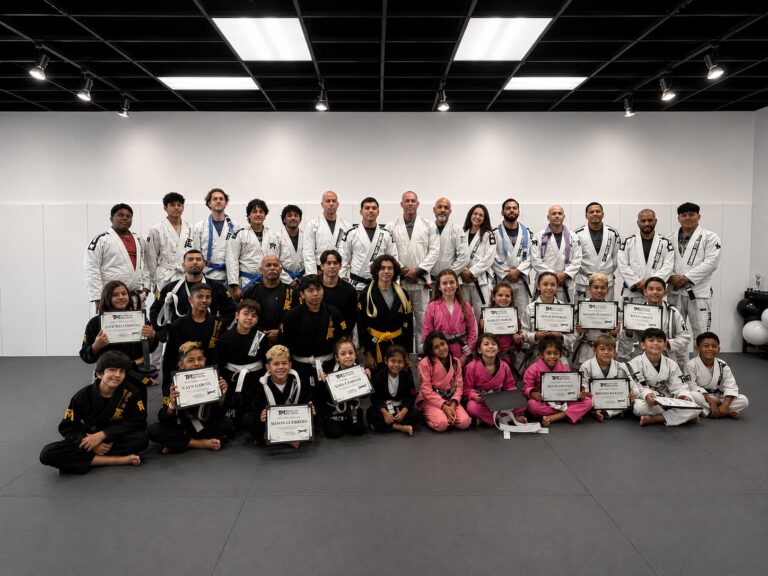
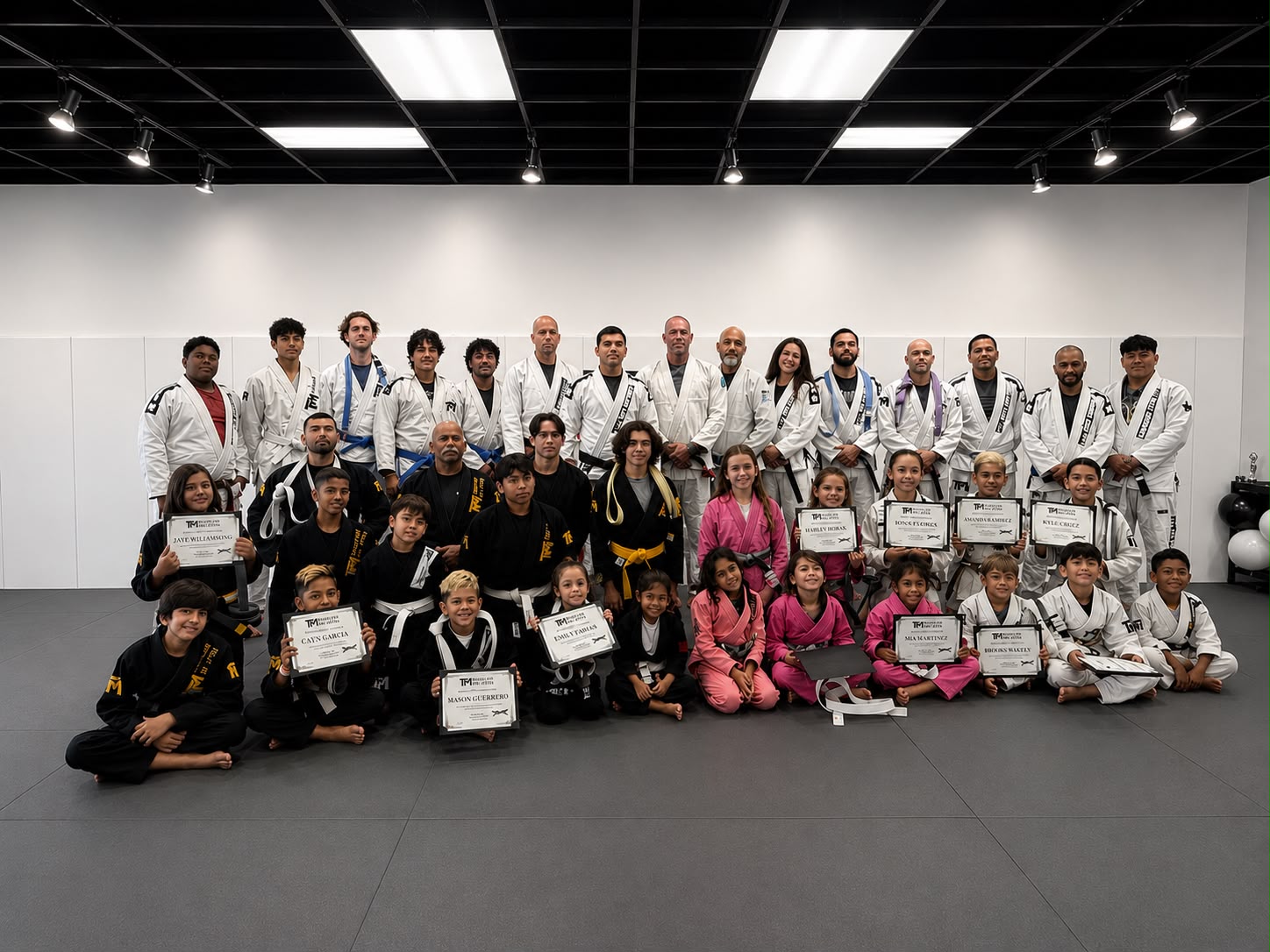
For dedicated martial artists developing their skills in Orange, California, achieving this milestone reflects consistent mat attendance and a reliable grasp of fundamentals. Rather than focusing on a vast library of complex tricks, promotional readiness centers on executing core techniques against resisting training partners.
DISCOVER TM BJJ ACADEMY – ORANGE
CLICK HEREFoundational Defensive Posture and Reliable Positional Escapes
Defensive capability forms the undeniable core of promotional readiness, ensuring students can protect themselves from inferior positions before seeking offensive opportunities.
Mastering Coordinated Hip Movement Mechanics
Fluid hip movement serves as the foundational driver behind every successful defensive frame and technical recovery on the ground. Practitioners must execute fundamental movements like hip escapes, bridges, and technical stand-ups automatically without relying on arm strength.
Creating immediate spatial separation allows a pinned athlete to realign their spine and recover guard before opponent pressure solidifies. Efficient hip mobility minimizes wasted physical energy while systematically defusing superior opponent weight distribution.
Technical Escapes from the Mount Position
Surviving the full mount demands disciplined elbow positioning tucked against the ribs to shield the neck and prevent arm isolation. The traditional elbow-knee escape and the bridging trap-and-roll represent mandatory proficiencies for any developing candidate.
Students must perform these recoveries calmly without giving up their back or overextending their arms under heavy top weight. Consistent execution returns the bottom player to an advantageous closed or half guard position safely.
Neutralizing Side Control and Crossface Pressure
Effective side control defense requires rigid structural frames across the neck and waist line to keep direct chest-to-chest contact at bay. Proper frame alignment prevents severe shoulder pressure and allows athletes to generate the necessary space for an effective hip retreat.
Developing reliable recovery habits stops opposing players from transitioning into knee-on-belly, north-south, or attacking isolated limbs. Technical patience and structural framing take precedence over erratic, exhausting attempts to bench press out of bad spots.
Escaping Back Control and Defending the Neck
Back control represents the most hazardous offensive position in grappling, demanding an immediate defensive priority on two-on-one wrist control. Practitioners must protect the chin line instantly, prevent the second hook, and systematically drop their shoulders toward the mat.
Clearing hooks and pivoting the hips inside the opponent’s torso turns a dangerous defensive emergency into an active guard recovery. Demonstrating consistent composure while escaping back control confirms genuine technical readiness for promotional advancement.
Guard Retention, Distance Management, and Passing Principles
Controlling distance from the bottom and navigating past an opponent’s legs from the top constitute the dual pillars of strategic positional development.
Maintaining Guard Retention and Distance Frames
Guard retention relies on dynamic foot placement against hips and biceps to absorb advancing momentum and maintain separation. When an opponent cuts angles, the bottom player must re-pummel their feet inside to re-establish defensive barriers.
Practitioners must recognize the precise moment to reset frames before their partner’s shoulder establishes deep chest connection. Calm guard retention denies passing points and sets up continuous opportunities for sweeps and counterattacks.
Executing Core Sweeps from Closed and Open Guards
Every candidate must demonstrate reliable sweeps that disrupt an opponent’s center of gravity and deliver a clean reversal of position. The scissor sweep, hip bump, and pendulum sweep represent foundational movements that exploit postural imbalances effectively.
Completing these reversals requires coordinating grip control, leg shearing, and active hip elevation to finish on top. A sound sweep seamlessly transitions directly into stable top control rather than a scrambled return to neutral.
Structured Guard Passing Systems
Passing the guard demands strong vertical posture, disciplined grip breaks, and continuous pressure without diving carelessly into submissions. Students should demonstrate proficiency in both pressure-based techniques like the knee slice and mobility-focused methods like the toreando pass.
Securing dominant chest contact and establishing control of the head or hips solidifies the completion of an effective pass. Technical passing emphasizes steady, incremental positional dominance over frantic scrambles and explosive physical lunges.
Standard Submissions, Takedowns, and Practical Application
Demonstrating controlled finishing mechanics alongside safe takedown protocols completes a balanced martial arts profile across all training situations.
Core Joint Manipulations and Control Mechanics
Finishing joint locks like the straight armbar and the kimura relies on isolating opponent limb leverage against your body’s full kinetic chain. Tight control of the triceps and shoulder joint prevents defensive turning and ensures complete biomechanical efficiency.
Applying submissions slowly and deliberately gives training partners ample reaction time to tap out safely during sparring rounds. Mechanical precision and controlled restraint demonstrate the maturity expected of advancing martial arts practitioners.
Fundamental Choke Alignment and Execution
Securing chokes such as the cross-collar, triangle, and rear-naked choke requires clean lateral carotid pressure rather than crude cervical twisting. Proper angular alignment and tight wedge creation produce clean blood chokes that minimize unnecessary musculoskeletal strain.
Practitioners should know how to finish these techniques from both bottom guard postures and dominant top configurations. Reliable finishing mechanics depend on deliberate body positioning rather than taxing forearm squeezing or forceful pulling.
Safe Takedown Fundamentals and Mat Breakfalls
Every engagement begins on the feet, making safe breakfalling mechanics and balance preservation mandatory safety skills. Fundamental single-leg takedowns, body lock trips, or controlled guard pulls allow practitioners to navigate transitions safely to the floor.
Understanding spatial awareness ensures that both practitioners land without sustaining preventable impact injuries on the mat surface. Confidence in basic standing transitions builds complete technical versatility across diverse training environments.
Building Mat Discipline and Composure Under Live Stress
Meeting standard promotional benchmarks requires consistent physical mat hours paired with reflective problem-solving across various sparring sessions. True development reflects your ability to maintain composure, breathe rhythmically, and adapt when encountering unfavorable or exhausting positions.
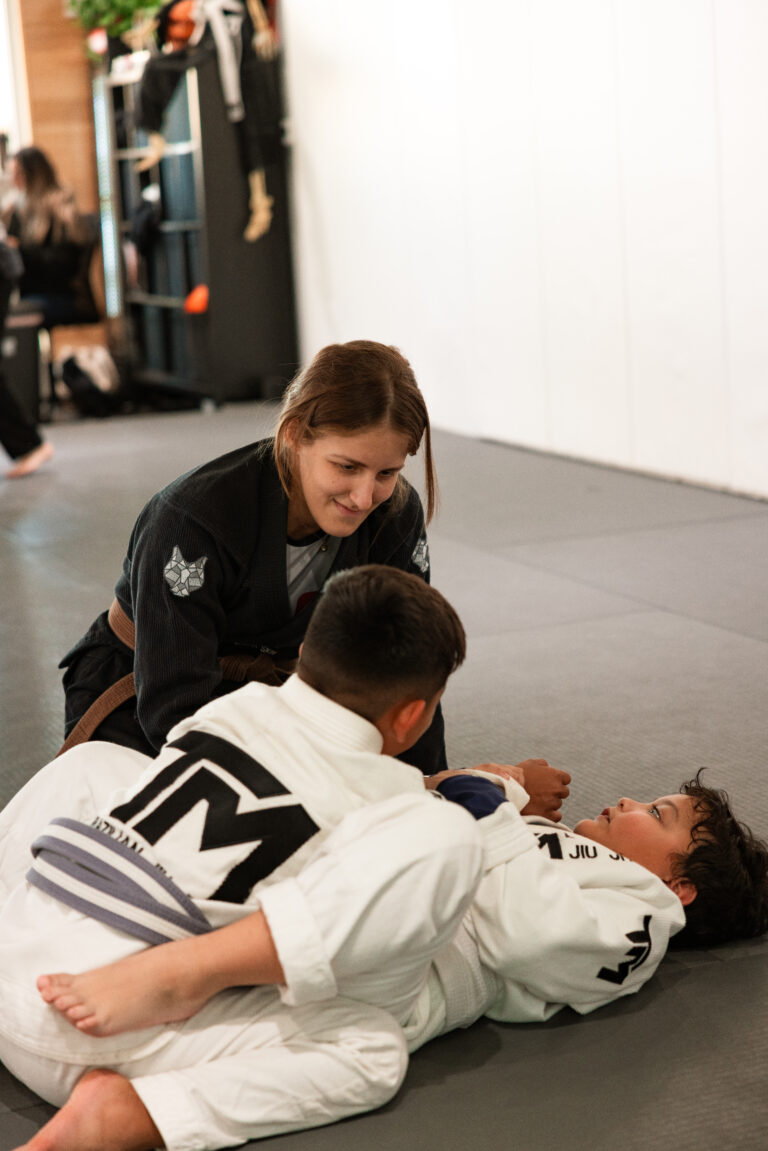
Training at TM BJJ Academy – Orange emphasizes technical clarity, training partner safety, and continuous personal growth through disciplined habits. Cultivating thoughtful problem-solving habits on the mats translates directly into everyday focus, self-assurance, and emotional resilience.
Measuring Technical Evolution Beyond Athletic Attributes
Progression is not measured merely by submission counts during open sparring, but by your command of positional hierarchies and mechanical fundamentals. Recognizing when to construct frames, when to yield pressure, and when to advance defines sustainable technical maturity.
Over time, these essential movements transform into intuitive habits that remain dependable regardless of an opponent’s size or strength. Committing to a process of continuous learning establishes a durable platform for lifelong advancement in martial arts.
DISCOVER TM BJJ ACADEMY – ORANGE
CLICK HEREMeeting the Standards of Mat Progression
Fulfilling the fundamental bjj blue belt requirements marks the true beginning of your analytical journey as a disciplined martial artist. By anchoring your practice in dependable escapes, active distance management, and controlled transitions, you construct an enduring foundation for technical growth.
If you are training in Orange, California, focus on precision over speed and value consistent, deliberate mat practice. Connect with our instructors, challenge your understanding every day, and take the next step on your martial arts path.